

Content


Automation in advertising has long ceased to be an optional extra and is now a standard part of working with Google Ads. Performance Max has become a prime example of this approach: the advertiser sets the goal, budget, feed, creatives, and audience signals, and the system itself determines where to display the ad. The format operates on Google AI, which optimizes bids, audiences, creatives, attribution, and budgets to achieve the specified goal. This is convenient but requires careful monitoring, as some decisions shift from the specialist to the algorithm.
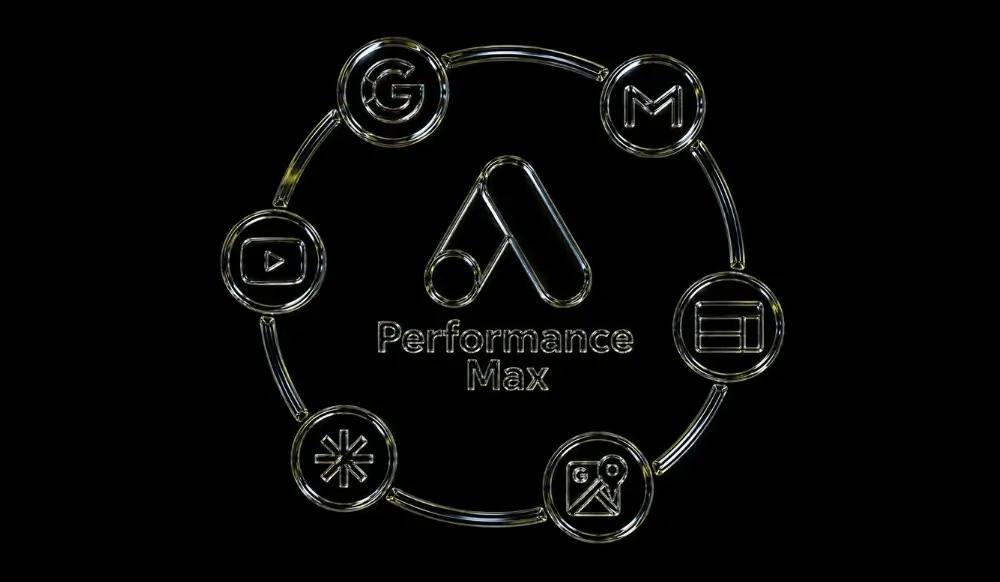
Performance Max is a campaign type in Google Ads that unifies various display channels within a single advertising system. Instead of separate structures for Search, Display, YouTube, or Shopping, businesses launch one format with a unified goal. The algorithm independently determines where and to whom to show the ad to achieve a conversion or conversion value.
The advertising system can operate across Search, YouTube, Display, Discover, Gmail, Maps, and other surfaces within the Google ecosystem. For advertisers, this means broader reach without manually launching separate formats. However, this model requires high-quality creatives, accurate analytics, and clear objectives.
Search operates via search queries, Shopping via product feeds, and Display via banner impressions. PMax integrates these approaches into a single system and automatically allocates the budget. The main difference is less manual control but greater automated reach.
Comparing Performance Max with Other Formats
The table shows that PMax is not a direct replacement for all other formats. In many projects, the best results come from combining several advertising tools, where each fulfills its specific role in the sales funnel.
Google Performance Max is not a magic sales button. The system uses machine learning, but the quality of the results depends on the input data: goals, conversions, feed, creatives, and audience signals. The cleaner the data and the more precise the settings, the higher the chances that automation will deliver real business results.
Audience signals help the system quickly understand who a business considers a potentially valuable user. These can include customer lists, website visitors, interests, or custom segments. The algorithm is not limited to these individuals but uses the signals as a guide for learning.
Campaigns use asset groups – collections of creatives, URLs, signals, and, if needed, products from a feed. They replace the classic logic of ad groups and help combine offers by themes, categories, or audiences. If everything is put into a single asset group, analysis and optimization become less effective.
The system automatically allocates the budget across channels, guided by the advertising campaign's goal. This can be convenient when there's sufficient data and conversions are properly set up. However, without quality analytics, it's difficult to understand which channel truly generated a sale and which merely received a portion of the budget.
PMax aligns perfectly with Google's overall direction towards advertising automation. For the platform, it's a way to more actively utilize AI, cross-channel impressions, and large datasets of behavioral signals. For businesses, it can be beneficial, provided the advertising tool isn't set up with a "set it and forget it" mentality.
Automation enables the system to find conversions across multiple channels at once. This expands reach and helps utilize inventory that an advertiser might not otherwise run independently. This is precisely why Google is actively developing the product and integrating AI capabilities.
Advertisers gain scale, automation, and access to multiple channels within one system. In return, they partially lose transparency, manual control over placements, and precise management of search queries. Consequently, Performance Max campaigns demand no less attention than traditional Search or Shopping campaigns; the focus of control simply shifts to different points.
Google Ads Performance Max performs best when there's a clear objective, sufficient conversions, and clean data. For e-commerce, a robust product feed is vital; for lead generation, quality tracking of inquiries and passing on lead value are essential. Without these, the algorithm might optimize for inexpensive but weak actions.

An online store with a correctly configured Merchant Center, up-to-date prices, and properly set up purchases provides a solid foundation for launching. The algorithm can leverage inventory, pricing, creatives, and user behavior. It's best to begin with priority categories rather than the entire catalog simultaneously.
For lead generation, this format should only be launched after verifying the quality of inquiries. If lead status isn't passed to the CRM, the system might optimize based on random form submissions or unqualified calls. Local businesses often need a combination of Search, local signals, and careful testing of automation.
Google Ads Performance Max often disappoints not due to the format itself, but because of inadequate preparation. The most common problems include incorrect goals, lack of segmentation, insufficient creatives, and chaotic conversion tracking. Automation amplifies whatever data it's given.
If brand terms are not controlled, the advertising mechanism might capture conversions that would have come through organic search or Search campaigns anyway. This creates impressive statistics but distorts actual effectiveness. For an honest analysis, it's important to look at incremental growth, not just total sales.
If the goal is chosen incorrectly, the algorithm will optimize for low-quality outcomes. For instance, a form submission might be cheap but not lead to actual sales. It's better to pass on conversion values and distinguish primary actions from secondary ones.
Using a single asset group for the entire product range makes the launch too generic. The system receives mixed creatives, various categories, and unclear signals. It's better to group offers by margin, categories, demand, or audiences.

Creatives impact how ads perform across YouTube, Display, Discover, and Gmail. If only a minimal set of texts and images is uploaded, the system will have fewer opportunities for testing. High-quality banners, videos, headlines, and descriptions help the algorithm operate more broadly.
Before launching, it's worth checking the foundation of your ad system:
This checklist helps launch automation on a solid foundation.
Performance Max should be launched when a business is ready to work with automation as a system, not as a quick experiment. This promotion format can deliver strong results, but it requires a high-quality feed, creatives, analytics, and goal control. If the foundation is weak, automation will only expose problems faster.
Launching is appropriate when there's a stable flow of conversions, clear economics, and a sufficient budget for learning. The format is especially well-suited for online stores with an up-to-date feed. It can also work in service niches if the transfer of high-quality leads to the advertising system is configured.
If a business is just testing demand, has little data, or doesn't understand lead quality, it's better to start with Search or Shopping. Classic formats offer more control at the start. After data accumulation, Google Performance Max can be integrated as a scaling tool.
Evaluating ad launches shouldn't be limited to CPA or ROAS in the ad platform. You need to look at sales quality, the share of new customers, brand traffic, repeat purchases, and CRM data. This kind of analysis truly shows whether Google Performance Max is growing the business or merely reallocating existing demand.
For an honest evaluation of results after launch, you should look at the following metrics:
This way, businesses see not just numbers in Google Ads, but the real contribution of automation to revenue.
Performance Max is a powerful tool when it has the right goals, clean data, a high-quality feed, and a clear structure. It can scale sales but doesn't replace strategy, analytics, and expert oversight. If you need to assess account readiness, set up Google Performance Max, and build an optimization system without blindly trusting automation, the Locomotive Digital team, as part of its service PPC will help launch campaigns so that the algorithm works towards business results, not just impressions.
AI website audit
Enter your website address and get results instantly.

Request a free audit — our expert will prepare a personalized action plan.
Your data is securely protected